.png)
How to welcome new subscribers as an artists building their email marketing systems

Before starting this blog, if you haven't read Post 1: Email Marketing Basics and Post 2: Creating a Lead Magnet, then go ahead and go to the unread blog post first. I will direct you back here.
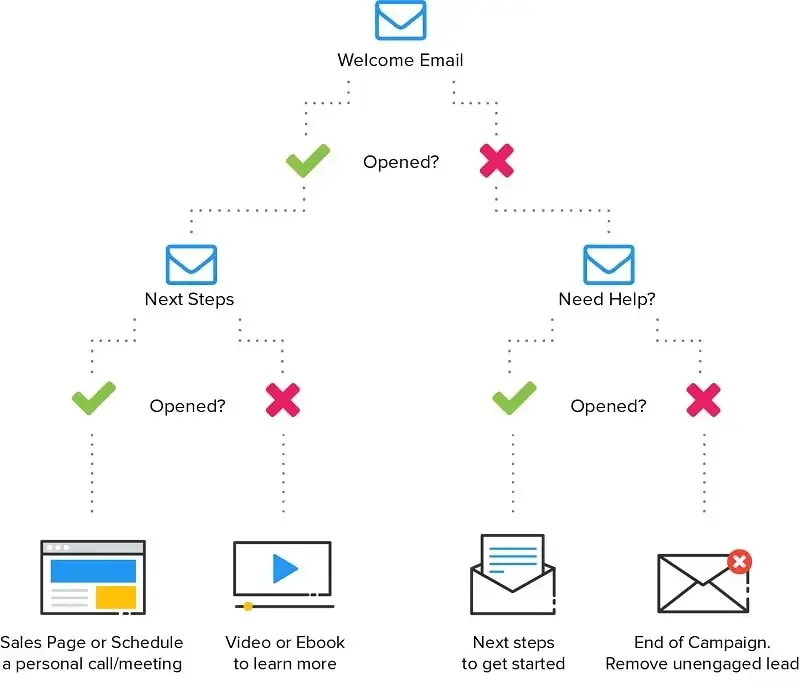
When someone joins your email list, they are at the peak of their curiosity about you. They just discovered your work, they liked what they saw enough to hand over their email address, and they are genuinely interested in what comes next. What you do in the hours and days immediately following that sign-up will determine whether they become a loyal follower who eventually purchases your work, or a name on a list that quietly forgets why they subscribed in the first place.
A drip campaign is a series of pre-written emails that send automatically based on a trigger, typically when someone new joins your list. The term “drip” refers to the way the emails are delivered gradually over time, at deliberate intervals, rather than all at once. The most important drip campaign you will ever create as an artist is your welcome sequence: the automated series of emails that greet new subscribers, introduce your work and your story, and begin building the kind of relationship that eventually leads to a sale.
This is the third post in a seven-part email marketing series for artists. If you have not yet read posts one and two on the foundations of email marketing and how to build a list as an artist, I recommend starting there. This post assumes you have a basic list-building strategy in place and you are ready to think seriously about what happens the moment someone subscribes.
What a Welcome Sequence Actually Does
Your welcome sequence has one primary job: it turns a stranger into someone who knows who you are, understands why your work matters, and feels something about it. That is not something that happens in a single email. It happens across a series of well-timed, thoughtful messages that each reveal a different layer of your work and your world.
Think of a welcome sequence the way you might think about meeting someone new at an art fair. You would not immediately launch into your full artist statement and price list. You would have a conversation. You would share something about yourself, show them a few pieces, tell a story about how a particular work came to be, and pay attention to what resonates with them.
The relationship builds naturally and gradually. A welcome sequence is that same conversation, delivered through email over the course of two to three weeks.
This timing is deliberate. You want to be present enough in the subscriber’s inbox that they remember who you are and begin to anticipate your messages. You also want to respect their attention and not arrive so frequently that your emails feel intrusive. For most artists, spacing welcome sequence emails two to three days apart strikes that balance well.
A Five-Email Welcome Sequence Framework
What follows is a framework for a five-email welcome sequence designed specifically for artists. You do not need to follow this exactly. Think of it as a starting point that you adapt to your own voice, your own story, and the specific needs of your audience.

The first email goes out immediately when someone subscribes and serves as both a welcome and a delivery. If you offered a lead magnet, this is where the subscriber receives it. Beyond the delivery, this email introduces who you are in two or three clear sentences, sets an honest expectation for what they will receive from you going forward, and closes with an invitation for them to reply and share something about themselves. That invitation to reply is not decorative. It signals that you are a real person having a real conversation, and any reply that comes in will improve the deliverability of your future emails by teaching the email provider’s algorithm that your subscribers engage with you.
The second email arrives two to three days later and is about your story. Why do you make what you make? What drew you to your particular medium or subject matter? What would you be doing if you were not doing this? This email is not your resume or your artist statement. It is the human narrative behind your work, told in a way that helps the subscriber feel a personal connection to you as a creative person. This is often the most important email in the entire sequence because it is where the subscriber moves from knowing your work to genuinely knowing you.
The third email, sent two to three days after the second, takes a closer look at your process. Walk the subscriber through how you approach a specific piece or a specific phase of your work. Talk about the choices you make, the challenges you encounter, the things that still surprise you about your own creative process. If your email platform supports embedded images, this is a wonderful email in which to share process photographs or in-progress shots. This email builds trust by showing the craft and intention behind what you create, which is something collectors deeply value.
The fourth email invites the subscriber further into your world. This might be a tour of your studio space, an introduction to a specific series of work and the ideas behind it, a look at the materials or tools that define your practice, or a glimpse at a project currently in progress. By the time this email arrives, the subscriber has heard your story and seen your process. They have a relationship with you that they did not have two weeks ago. Now you are deepening that relationship by showing them more.
The fifth email, which arrives about a week after the fourth, is your softest possible offer. This is not a hard sales pitch and it should not read like one. It is a gentle invitation to explore. You might introduce your shop and share a few pieces currently available. You might let subscribers know that commission spots are open. You might offer early access to a new series before it goes public. The specific offer matters less than the principle: you have spent four emails building a real relationship before making any kind of ask, which means the offer feels earned and natural rather than pushy or transactional.
Setting Up Automations in Wix Email Marketing
Wix Email Marketing includes an automation feature that makes it straightforward to build and activate your welcome sequence. You define a trigger, typically a form submission or a new contact being added to your list, and then you design the sequence of emails that follows from that trigger. You set the delay between each email, write and format your messages, and turn the automation on. From that moment forward, every new subscriber moves through your sequence automatically, regardless of whether you are in the studio, at a gallery opening, or on a well-deserved break.
As a Wix Legendary Partner, Built by Kasi sets up email automations as part of every custom artist website build. If you have a Wix site and have not yet explored the automation tools available to you within Wix Email Marketing, this is one of the highest-leverage improvements you can make to your marketing system, because it does the relationship-building work even when you are not actively working.
Two Mistakes Worth Avoiding
Two errors are common enough in artist welcome sequences to be worth naming specifically, because both will undermine even a technically well-constructed series.
The first mistake is making every email primarily promotional. If your welcome sequence reads like a series of soft sales pitches, your subscribers will learn very quickly to ignore your emails or to unsubscribe. The welcome sequence is a relationship-building tool, and relationships take time to develop. Save your offer for the end of the sequence, after you have invested genuinely in the subscriber’s experience.
The second mistake is writing in a voice that does not sound like you. Your email marketing will be most effective when it reflects the same authentic voice and perspective you bring to your work and your practice. If your creative world is meditative and contemplative, your emails should feel that way. If your work is bold and energetic, let that come through in every sentence. Authenticity builds trust faster than perfectly crafted marketing copy ever will, because people can sense the difference between someone performing for them and someone genuinely talking to them.
Build Your Email System With Expert Guidance
The Artist’s Launch Academy opens with Modules 1 and 2 on June 1st, and right now you can enroll with a $500 credit toward SEO coaching. Email marketing and SEO work together as the two most durable, algorithm-independent pillars of a sustainable art business online. Build both at the same time with the right support. Claim your $500 SEO credit here
If you have questions about how to set up your specific welcome sequence or how automation works for your type of creative business, I offer free 30-minute discovery calls where we can talk through your situation in detail. Book your 30-minute call with Kasi
Keywords targeted: email marketing strategies wall art business promotion, how to email marketing for artists, email marketing tips for artists


Drip campaigns only work when messages actually reach the inbox, and a list that has not been checked in a while can quietly hurt delivery without any obvious warning signs. The comparison at \https://mailtester.ninja/best-email-verification-tools/ lays out how different verification tools perform and what they cost, which is helpful for anyone trying to figure out where to start without spending hours researching on their own.